
Blog
How to Use a Daily Planner: A Simple Guide to Planning Your Day

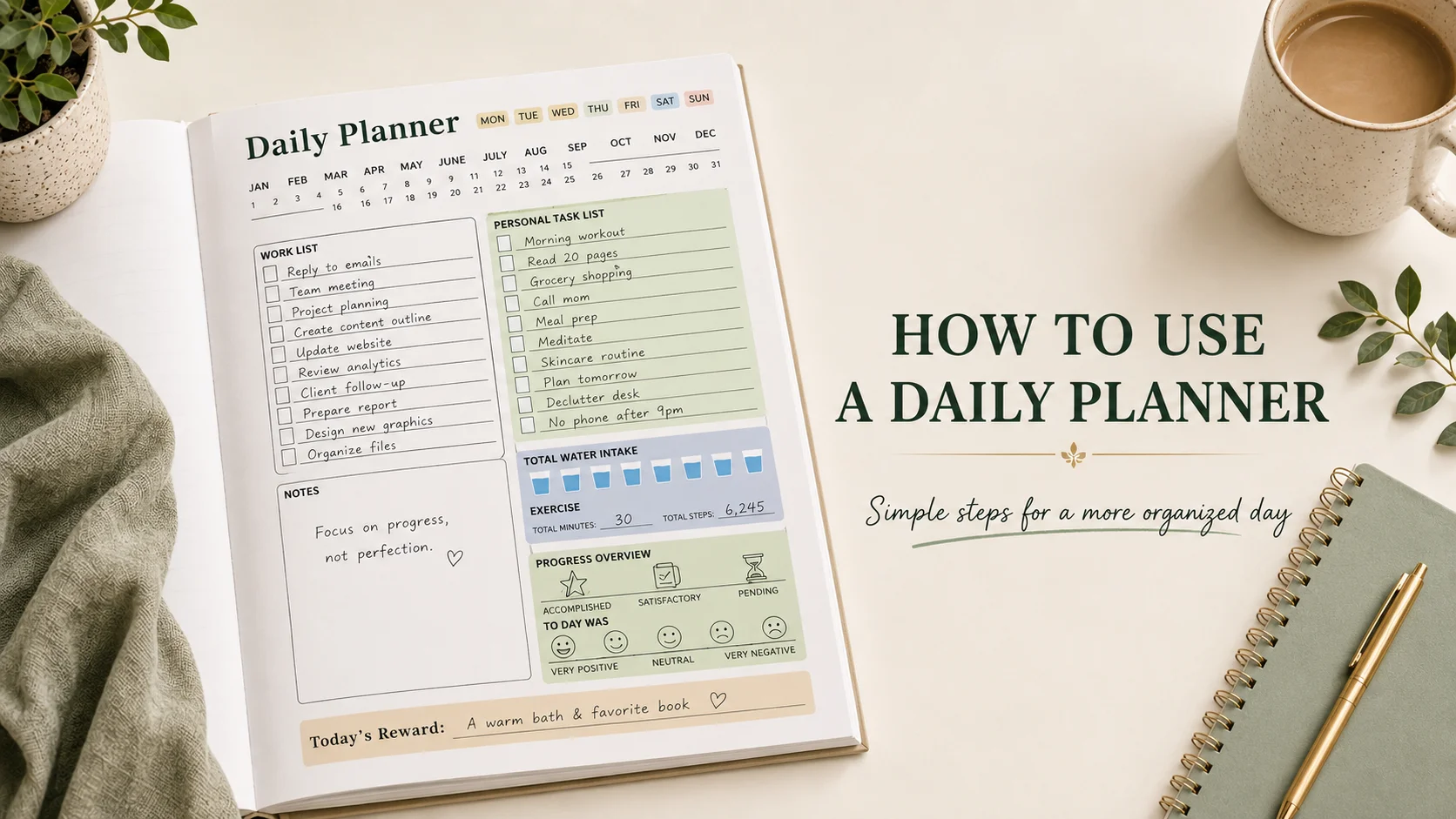
A daily planner can help you organize your day, clarify your priorities, and make your workload feel more manageable. But knowing how to use a daily planner effectively is more than simply writing down a list of tasks.
The goal is to create a simple system that helps you decide what deserves your attention and when you should work on it.
What Is a Daily Planner?
A daily planner is a tool for organizing your tasks, appointments, priorities, and other important activities for a specific day.
Unlike a general to-do list, a daily planner can help you connect what you need to do with when you plan to do it. This makes it easier to see your day as a whole and avoid trying to accomplish everything at once.
Why Use a Daily Planner?
Using a daily planner can help you:
- Organize your daily responsibilities
- Identify your most important tasks
- Create a realistic schedule
- Reduce mental clutter
- Keep track of appointments and deadlines
- Maintain focus throughout the day
- Review your progress
The key is not to fill every available space. A useful planner should make your day clearer, not more complicated.
How to Use a Daily Planner
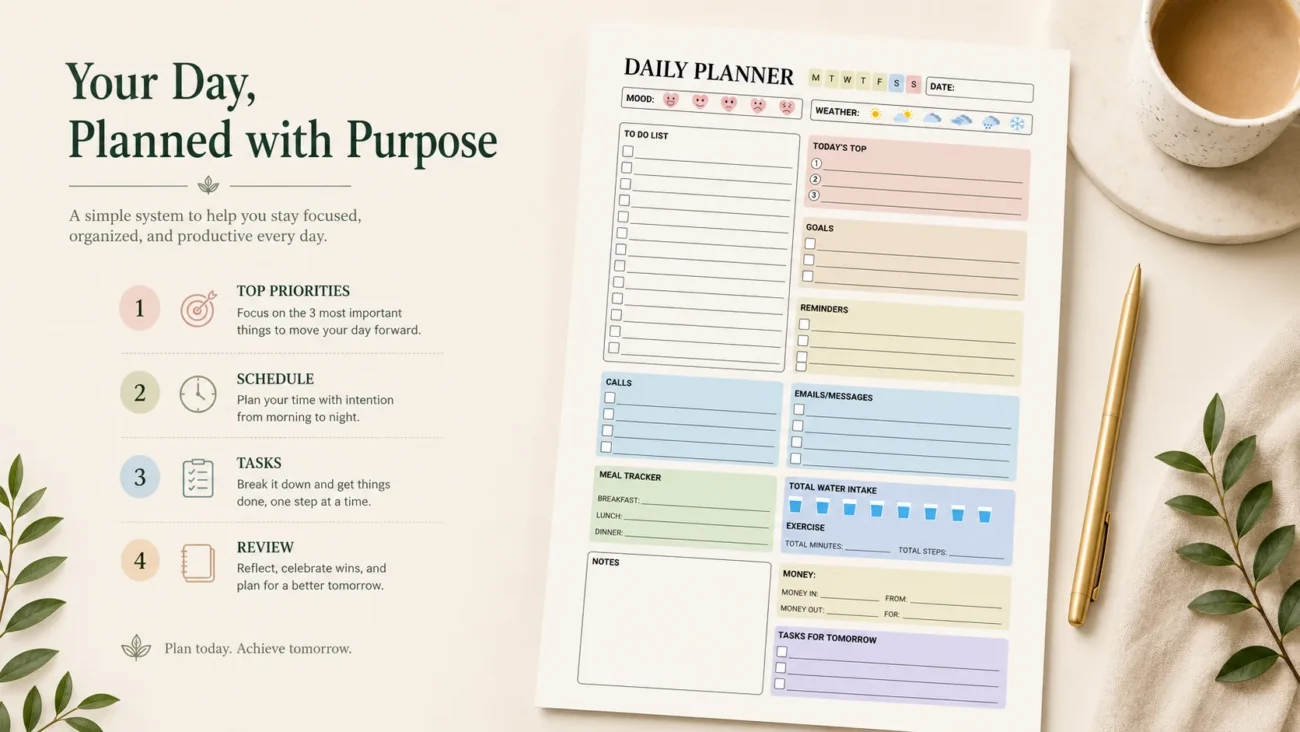
1. Start With Your Priorities
Before adding every small task, identify the things that matter most that day.
Choose a few important priorities rather than creating an overwhelming list. These could be work responsibilities, personal tasks, appointments, or anything that must be completed.
Your priorities should answer one simple question:
“What would make today feel productive if I completed it?”
2. Write Down Your Tasks
Once your priorities are clear, write down the tasks you need to complete.
Separate important tasks from optional tasks. This helps you understand what actually needs your attention and prevents your daily plan from becoming unrealistic.
You do not need to plan every minute of your day. The purpose is to create direction.
3. Assign Time to Important Tasks
A daily planner becomes more useful when tasks have a place in your schedule.
Estimate how long important activities will take and assign them to appropriate periods of the day. Leave some empty space between tasks for unexpected work, breaks, or delays.
A realistic schedule is usually more effective than a completely full one.
4. Keep Your Daily Plan Simple
One of the biggest mistakes when using a daily planner is trying to plan too much.
Instead of creating a long list of twenty tasks, focus on the activities that are genuinely important.
A simple daily planning system might include:
Top Priorities → Scheduled Tasks → Appointments → Optional Tasks → End-of-Day Review
This gives you structure without making planning another source of stress.
5. Review Your Day
At the end of the day, spend a few minutes reviewing your planner.
Look at what you completed, what remains unfinished, and whether your schedule was realistic.
Unfinished tasks do not automatically mean you had an unproductive day. Some tasks may simply need to be moved to another day.
The review helps you improve your planning system over time.
A Simple Daily Planning Routine
If you are new to daily planning, you can start with a simple routine:
Morning: Choose your priorities and review your schedule.
During the day: Follow your plan while adjusting it when necessary.
Evening: Review completed tasks and move important unfinished work forward.
The most effective daily planner is one you can consistently use. You do not need a complicated planning method to create a more organized day.
Final Thoughts
Learning how to use a daily planner is ultimately about creating clarity. Instead of keeping everything in your head, you create a visible plan for what matters, when it needs to happen, and what can wait.
Start with a few priorities, create a realistic schedule, and review your progress regularly. Over time, your daily planner can become a simple system for staying organized and focused.